

Opening Remarks
Part 1 introduced hardware calibration and material control to eliminate basic laser cutting deviations. Based on stable equipment and qualified raw materials, standardized processes, operational norms and periodic maintenance are critical for long-term batch production stability.
1. Process Standardization & Optimization
Unregulated parameter adjustment is a major cause of unstable cutting quality. A material and thickness-based standard process library ensures repeatable, high-precision mass production.
1.1 Unified Process Parameters
Fixed parameter sets covering laser power, cutting speed, focal position, nozzle type and gas pressure are formulated for different materials. Unauthorized parameter modification is prohibited. All new batches require trial cutting to verify burr-free, defect-free results before mass production.
- Thin Carbon Steel: Oxygen cutting, negative focus, low power & high speed
- Thick Carbon Steel: Low-pressure oxygen cutting, moderate focus & steady low speed
- Stainless Steel: High-purity nitrogen cutting, positive focus for anti-oxidation
- Aluminum & Copper: Large-aperture nozzle & high-purity nitrogen anti-reflection cutting
1.2 Cutting Trajectory Optimization
Pulse pre-piercing prevents thick plate thermal ablation. Corner deceleration avoids local overheating and edge burning. Optimized lead-in lines and micro-joints reduce thermal deformation and dimensional offset.
1.3 Standard Consumable Matching
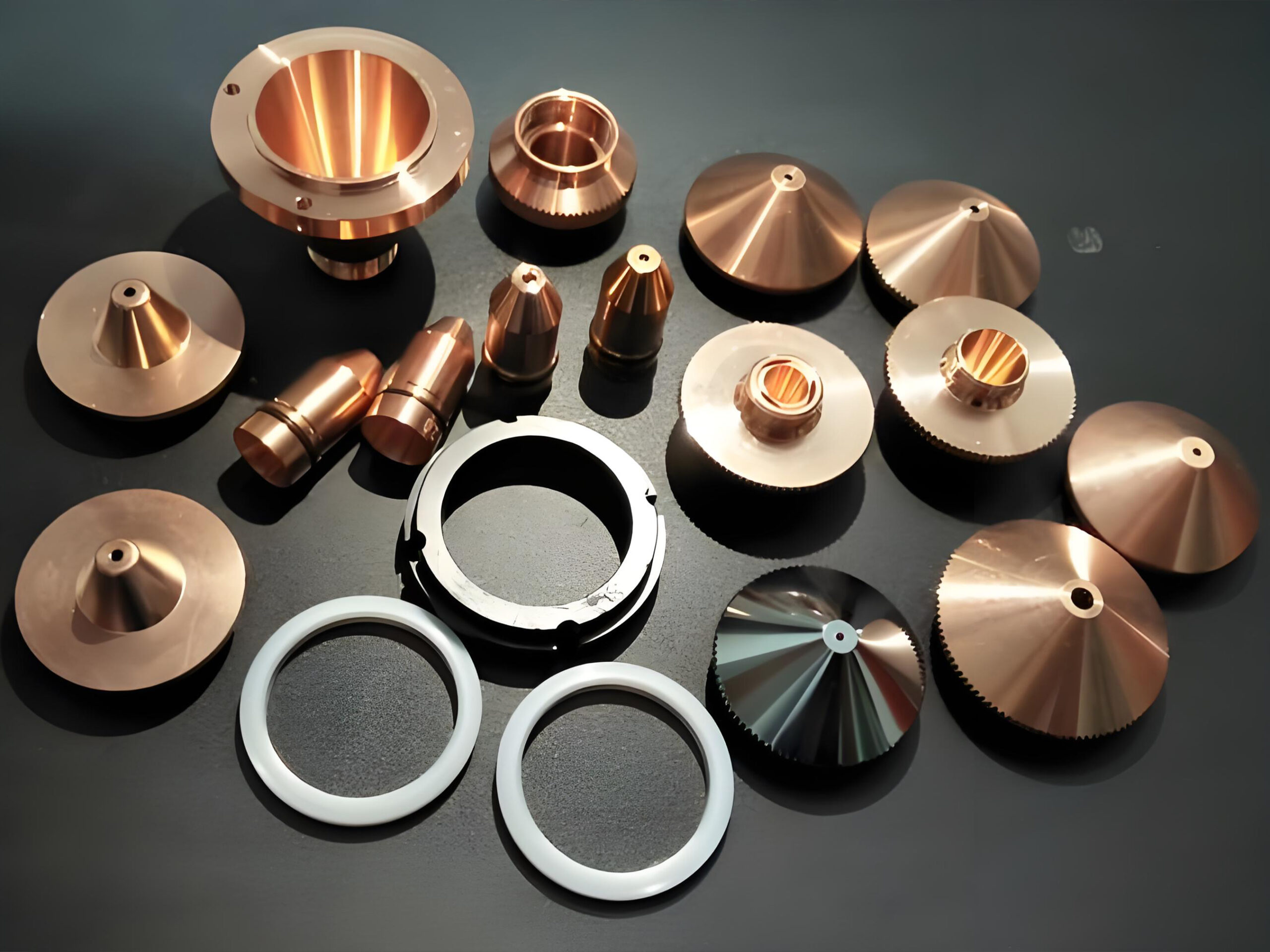
Small-aperture nozzles (1.0/1.5mm) deliver smooth cuts for thin sheets, while large-aperture nozzles (2.0/2.5mm) ensure smooth slag discharge for thick plates. Deformed or clogged nozzles are replaced regularly to stabilize airflow and cutting accuracy.
2. Standard Workshop Operation & Environment Control
2.1 Stable Processing Environment
Workshop temperature is maintained at 18–28°C to avoid machine thermal expansion and laser power drift. Continuous dust extraction prevents beam interference, reducing burr generation and lens wear.
2.2 Unified Operating Specifications
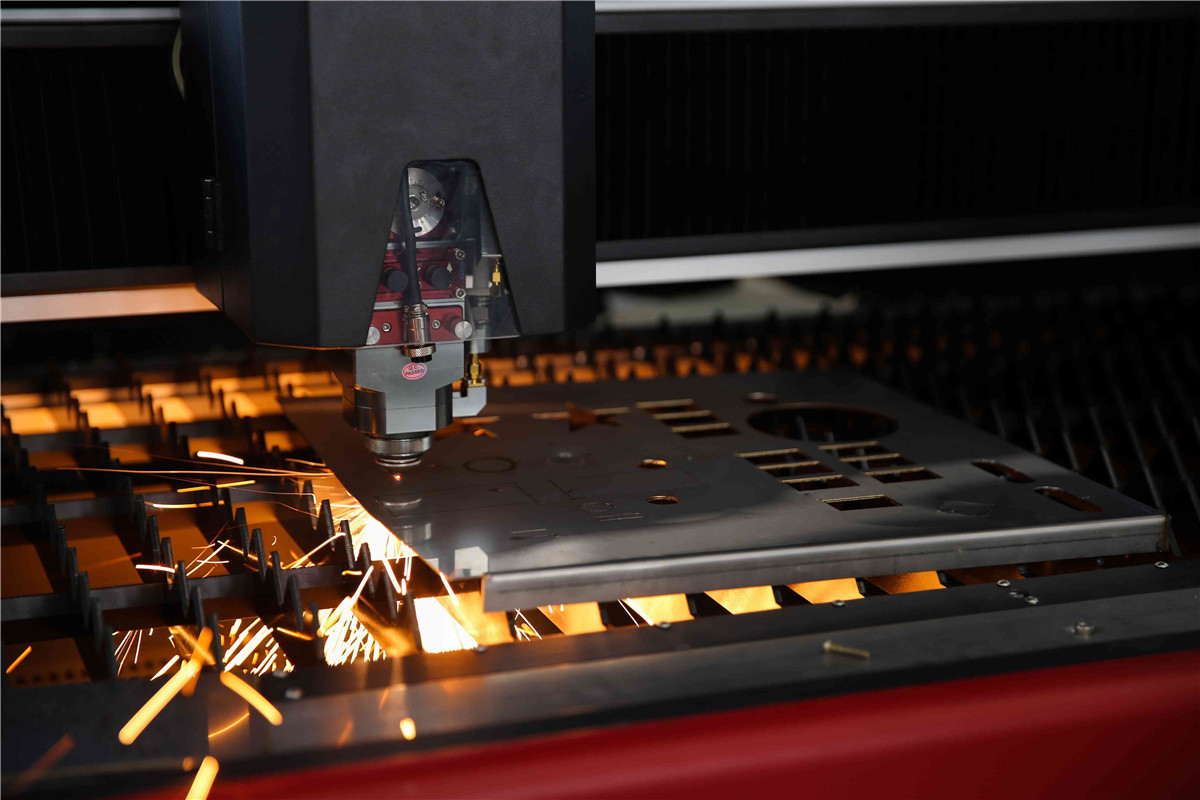
Standard startup workflow: chiller preheating → air compressor drainage → lens & nozzle inspection → concentricity calibration → sample trial cutting. Clamping fixtures fix thin sheets to prevent thermal displacement.
First-piece inspection is mandatory for material or thickness switching. No arbitrary parameter adjustment is allowed during batch production. Long-duration full-power operation requires intermittent cooling to avoid thermal accumulation and parameter drift.
3. Periodic Maintenance Schedule
Daily Maintenance
Clean lenses and nozzles; check chiller temperature and air pressure; clear table slag and dust.
Weekly Maintenance
Calibrate nozzle concentricity and height sensors; drain air compressor filters; lubricate guide rails and racks.
Monthly Maintenance
Calibrate full optical path; test laser power stability; clean chiller and replace filters; verify machine positioning accuracy.
Quarterly Maintenance
Check lens wear and gas pipeline leakage; recalibrate worktable levelness.
4. Quick Troubleshooting for Common Defects
- One-sided burrs & asymmetrical cuts: Eccentric optical path or nozzle deviation
- Front qualified, rear burnt edges: Chiller temperature rise, power drift or dirty lenses
- Intermittent unpenetrated cuts & slag: Unstable pressure, humid air or laser power attenuation
- Batch dimensional instability: Mechanical clearance error, sheet warping or insufficient clamping
- Oxidized & pitted cutting surfaces: Low gas purity, sheet rust or contaminated lenses
Conclusion
Stable laser cutting quality is achieved through standardized processes, strict operation norms and cyclic maintenance. Combined with the hardware and material control rules in Part 1, the full-process management system eliminates most controllable processing variables.
These standardized measures guarantee burr-free, dimensionally stable and high-precision sheet metal parts, effectively reducing rework costs and delivering consistent, reliable manufacturing quality for industrial and customized orders.
