
Diode laser metal cutting and fiber laser metal cutting are the two dominant laser solutions for modern metal fabrication in 2026. Many DIY enthusiasts and processors struggle to select the right laser for metal cutting, as the two technologies differ greatly in performance, cost efficiency and application scenarios.
This article offers a concise, targeted comparison between diode lasers and fiber lasers to help you choose the optimal device for your metal cutting projects.
1. Core Performance Comparison: Diode Laser vs Fiber Laser
The performance differences between diode and fiber lasers for metal cutting stem from their structural and working principles, which directly determine their beam quality, cutting capacity and long-term operational stability in metal fabrication.
1.1 Working Principle
A fiber laser is a high-efficiency solid-state laser that generates and transmits laser beams through rare-earth-doped optical fibers, featuring minimal beam loss and highly concentrated energy. A diode laser, or semiconductor laser, produces laser energy via semiconductor chip excitation. It adopts a compact, fiber-free structure with simpler assembly and lower structural complexity.
1.2 Beam Quality
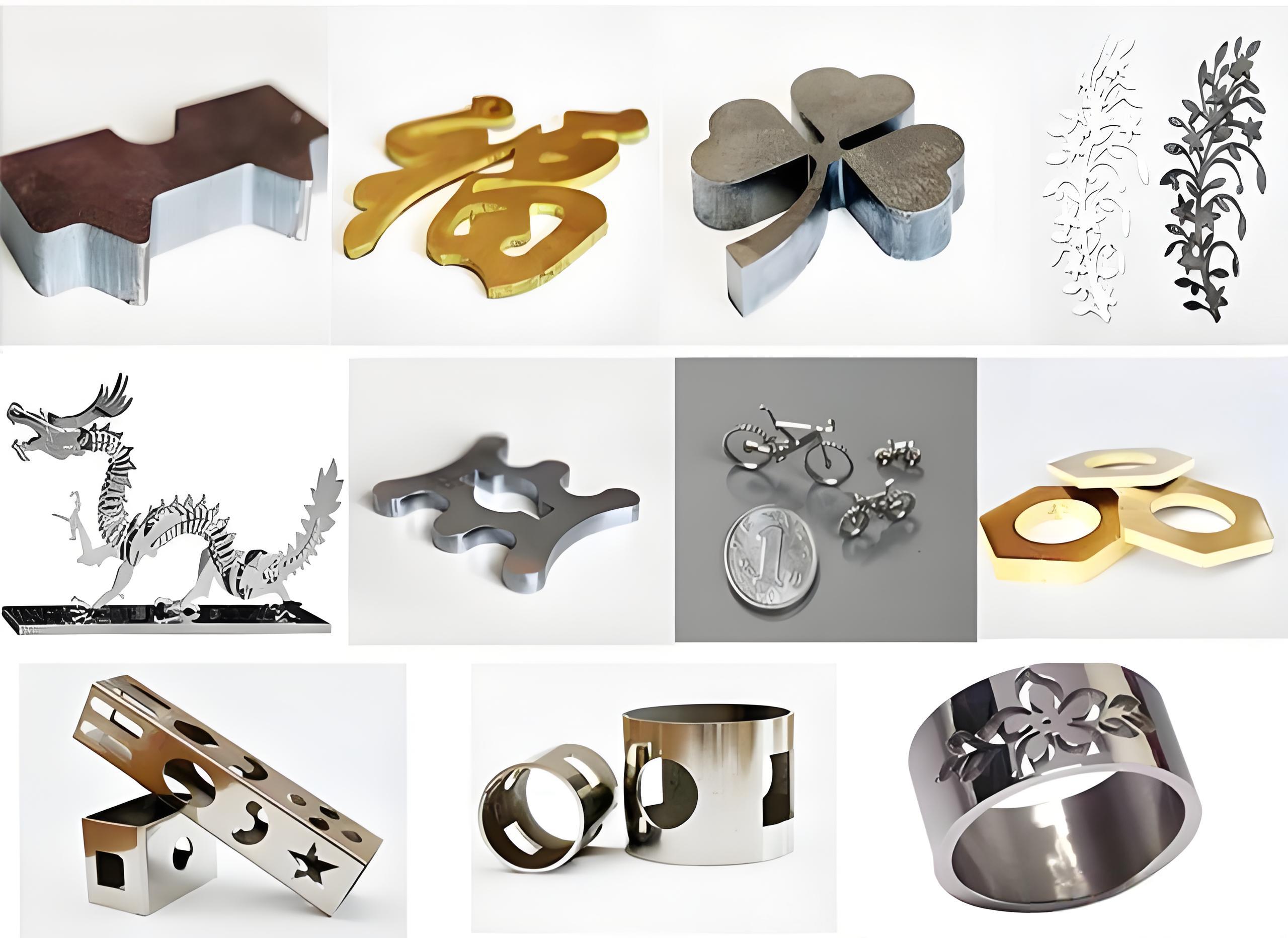
Fiber lasers deliver exceptional beam quality with a tiny, uniform focal spot, enabling ultra-precise cutting of fine slits and intricate metal patterns. While 2026 upgraded diode lasers have improved beam performance, their relatively larger spot size and minor beam divergence still result in lower precision for detailed metal cutting compared with fiber lasers.
1.3 Cutting Capacity
Fiber lasers support high-power output, cleanly and stably cutting 3mm–20mm thick metals, including carbon steel, stainless steel, aluminum alloy and copper, suiting industrial thick-plate manufacturing. Diode lasers specialize in thin metal cutting with a stable thickness range of 0.1mm–3mm. They perform excellently on thin steel, aluminum and brass sheets but cannot achieve full, burr-free cuts on thick metal plates.
1.4 Operational Stability
Equipped with an integrated fiber transmission structure, fiber lasers have low failure rates, strong anti-interference capability and round-the-clock stability, ideal for 24/7 industrial metal cutting. Diode lasers have fewer vulnerable components and lower maintenance costs, yet heat accumulation in semiconductor chips causes gradual energy attenuation under sustained high-load operation, making them more suitable for intermittent small-batch metal processing.
2. Pros & Cons: Diode Laser and Fiber Laser for Metal Cutting
The best laser for metal cutting depends on comprehensive cost performance, processing quality and scenario adaptability, rather than isolated performance advantages.
2.1 Diode Laser: Advantages & Limitations
Core Advantages: Diode laser metal cutting features low upfront investment and operational costs, with low power consumption and no consumable fees. Its compact, portable design requires no professional installation and supports plug-and-play operation. It produces smooth, burr-free edges on thin metals, perfectly fitting fine cutting and engraving of thin metal materials.
Key Limitations: Limited by power output and beam quality, diode lasers lack efficiency and stability for thick or diverse metal processing. They cannot meet the demands of high-intensity, large-scale industrial metal cutting production.
2.2 Fiber Laser: Advantages & Limitations
Core Advantages: As the industrial-grade solution for metal cutting, fiber lasers deliver high power, superior precision and fast cutting speeds. Compatible with nearly all metal types and thick plates, they ensure stable long-term operation and reduce post-processing work, significantly boosting mass production efficiency and product yield.
Key Limitations: Fiber laser equipment requires high initial purchasing costs, occupies large space and demands professional installation and routine maintenance. Its high operational expenses make it uneconomical for low-budget, small-batch metal cutting tasks.
3. Target User Selection Guide
Matching the 2026 metal fabrication market demands, this section provides practical selection suggestions for hobbyists, small workshops and industrial enterprises to choose the right laser for metal cutting.
3.1 Hobbyists & DIY Users
Best Choice: Diode Laser
For budget-friendly thin metal cutting, engraving and custom DIY projects with small output demands, diode lasers offer the best cost performance. Easy to operate, portable and energy-efficient, they fully satisfy daily DIY metal processing needs without redundant industrial-grade performance.
3.2 Small Workshops & Micro Factories
Best Choice: Diode Laser (Upgrade to Low-Power Fiber Laser If Needed)
Small workshops focused on customized thin metal batch processing can use diode lasers to control costs while maintaining stable output. For occasional thick-plate or high-precision metal cutting orders, upgrading to a low-power fiber laser balances processing capability and economic benefits.
3.3 Commercial & Industrial Enterprises
Best Choice: Fiber Laser
Industrial enterprises with large-batch, long-term, multi-material and thick-plate metal cutting requirements prioritize efficiency and stability. Fiber lasers provide reliable high-speed, high-precision cutting and outstanding durability, perfectly adapting to industrial mass production and delivering favorable long-term ROI.
4. Conclusion
In 2026, diode lasers and fiber lasers serve distinct purposes in metal cutting, with no absolute superiority between the two. Diode lasers are the cost-effective choice for thin metal cutting, DIY creation and small-batch customization, tailored for hobbyists and small workshops. Fiber lasers stand as the premium solution for thick metal cutting and industrial mass production, ideal for commercial enterprises pursuing high precision and production efficiency.